
You roll into the fairground at 7 a.m., the dew still on your visor, and there are already 400 motorcycles parked in rows that stretch past the grandstand. A guy on a forty-year-old Gold Wing is brewing coffee on a camp stove next to a guy on a Pan America that costs more than my first car. Nobody's arguing about which is better. That's the first thing that surprises most people about a motorcycle rally — it looks nothing like the tribal turf war the internet promises.
But rallies do have their own logic, their own unwritten schedule, and a handful of customs that will get you a raised eyebrow if you ignore them. I've done big ones (a week-long national gathering, 12,000 bikes), small ones (a 300-person campout in the hills), and one rally where I was the only rider under 40. Here's what actually happens, what it costs, and what I got wrong the first time.
Key takeaways
- Expect to spend $300–$900 for a weekend once gate pass, camping, fuel and food are counted — hotels double it.
- Arrive early (before 10 a.m. on opening day) or you will queue 45 minutes at the gate with your engine idling in July heat.
- Wear real protective gear. The "biker costume" thing is a myth at any serious rally.
- Learn the two-finger wave and the 70/30 braking habit before you go — both are social and safety currency.
- Book the exit day off work. The Sunday exodus is brutal.
Let's get into it, starting with the things you can't Google your way around.
Your first motorcycle rally: what actually happens when you arrive
The gate is the first reality check. Big rallies run a registration tent, a wristband line and a separate vehicle gate; small ones have a guy named Dave with a clipboard. Either way, bring your license, your registration and proof of insurance — rallies that run on private land often check all three, and you'll be turned around if you don't have them.
The parking and camping reality
Nobody tells you this: at most rallies, your motorcycle is your table, your chair and your luggage rack for the entire event. Camping is usually a field. If it rained the week before, that field is a mud pit by Saturday, and I mean the kind where you watch a guy in flip-flops lose a boot. Bring a small tarp and a folding chair. You will use both within the first two hours.
Entry lines move fast — ten, fifteen minutes at a well-run rally — but only if you arrive early. My worst mistake, back in my first season, was rolling in at 2 p.m. on the opening Saturday. Ninety minutes of stop-and-go heat, a boiling engine, and a sunburn I'm still annoyed about.
The daily rhythm
Rally days tend to follow the same arc: coffee and bike talk at dawn, demo rides and vendor row mid-morning, a group ride or a stunt show around midday, then live music in the evening. Most big rallies publish a schedule app — download it offline, because cell service at a crowded fairground is a joke.
- Morning: demo rides, coffee, swap meet
- Midday: group rides out, vendor tents, food trucks
- Evening: concerts, bike show judging
- Late night: campfire conversations that are genuinely the best part
How to dress for a motorcycle rally
Honestly? Wear what you'd wear to ride. That's it. The leather-vest-and-no-helmet image belongs to a photo shoot, not a real event.
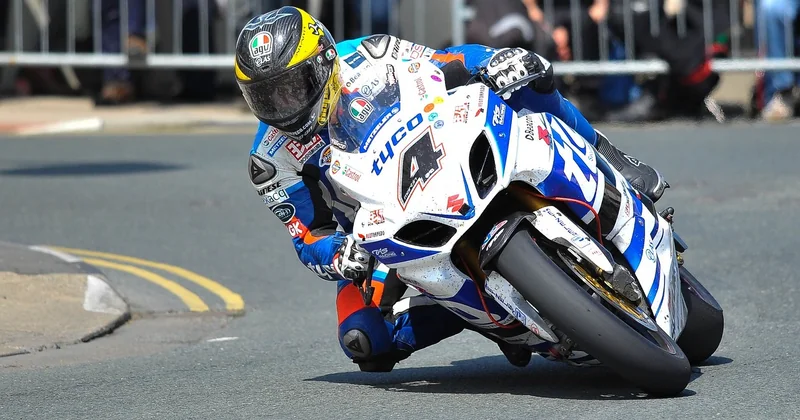
In practice, you'll see three groups. The ATGATT crowd in full textile or leather, the casual riders in an armoured riding jacket over jeans, and a small minority in street clothes who spend the weekend looking miserable in the sun. Guess which group gets the sunburn and the scraped elbow.
My default kit for a summer rally, refined over several seasons of trial and error:
- Mesh or ventilated riding jacket with real shoulder and elbow armour
- An open-face or modular helmet — more airflow, and you can actually talk to people at a standstill
- Riding gloves, because sunburned knuckles are a specific kind of regret
- Two pairs of boots: one to ride in, one to walk around in
- Rain shell, folded small. You'll need it once, guaranteed
- A hat and sunglasses for the non-riding hours
Layer for temperature swings too — desert rallies hit 35°C at 2 p.m. and 12°C at 5 a.m. And pack a light hoodie for the evening concerts; the wind on an exposed fairground cuts right through a t-shirt.
What is the 12 second rule on a motorcycle?
It's a following-distance guideline: you should be able to count roughly 12 seconds between your bike and the vehicle ahead before you reach the point where that vehicle was. At highway speeds that's a long gap — a third of a kilometre or more — which is exactly the point. It gives you time to react to a pothole, a dropped item, or a truck's retread blowing apart in your lane.
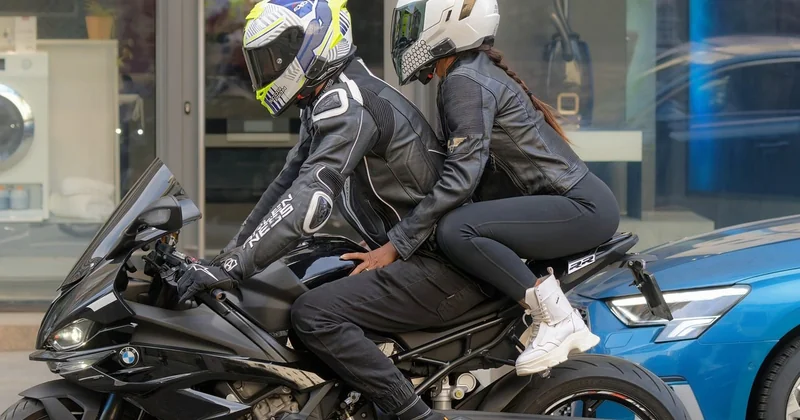
At rallies this matters more than you'd think. Group rides string out on unfamiliar roads with riders of mixed skill, and the temptation to close the gap is strong. Don't. I watched a five-bike pile-up at a rally in my second season because the last rider was riding two seconds off the wheel in front. Nobody was badly hurt, but three bikes went home on a trailer.
What is the 70/30 brake rule for motorcycles?
The 70/30 rule is shorthand for brake force distribution: on a standard motorcycle under hard, straight-line braking, the front brake provides roughly 70% of your stopping power and the rear about 30%. Weight transfers forward as you decelerate, loading the front tyre, which is why the front brake does the heavy lifting.
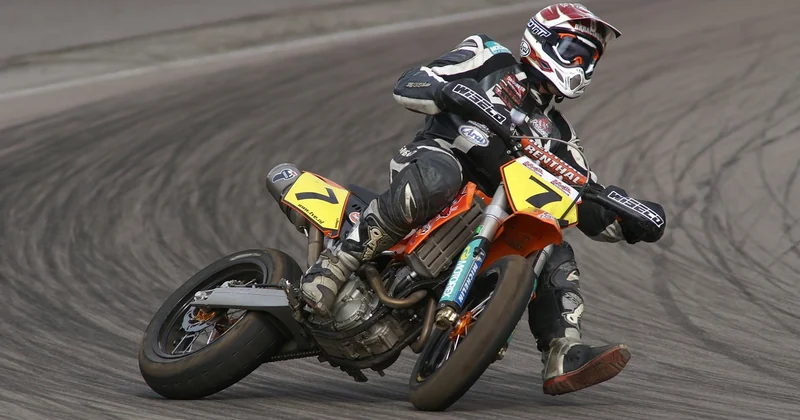
Two caveats, because this is where riders get into trouble. First, that ratio assumes a straight line and a dry surface — in gravel, wet grass or a rally campsite at walking pace, favour the rear brake and go gently. Second, if your bike has ABS, let it work; grabbing a fistful of front brake on a modern bike is a very different proposition than on a 1985 cruiser.
Practice it in an empty car park before the rally. Spend twenty minutes on hard stops from 50 km/h and you'll arrive far more confident than the rider who hasn't touched their front lever in anger since their test.
What does 2 fingers down mean to bikers?
Two fingers extended downward, held low near the tank or off the left bar, is a greeting between motorcyclists — a casual "ride safe." It's a low-key wave, delivered without lifting the hand fully off the bar, and it's the standard acknowledgment when you pass another rider coming the other way.
The etiquette around it is looser than the internet suggests. Most riders return it. Some don't, and that means nothing personal — they may be mid-corner or managing traffic. Don't take it as a snub, and don't wave frantically either. A relaxed two fingers is enough.
You'll see hundreds of these exchanges on a rally approach road. It's one of the small pleasures of the whole experience.
A quick word on budget: weekend vs full week
I've tracked my own rally spending across several events, and the pattern is consistent. A weekend rally runs $300–$400 for one rider if you camp. A week-long national gathering with a hotel instead of a tent lands closer to $1,200–$1,500, mostly because accommodation eats everything. Camping is the single biggest lever you control.
What I wish I'd known before my first rally
Three things, in order of how much they cost me.
Do a proper pre-trip inspection. Chain tension, tyre tread, oil, brake pads, lights, and tyre pressure set cold. I skipped this once, and a chain that was "probably fine" became a roadside repair involving two strangers and a borrowed socket set.
Bring the small spares. A tyre plug kit, a compact pump, cable ties, a spare fuse, and a torque wrench if your bike has critical fasteners. You probably won't need them. Somebody near you will.
Plan your exit. Sunday morning at a big rally is a slow-motion evacuation. If you can leave Sunday night or Monday morning, do it. Otherwise, accept an hour in the queue and enjoy the last of the coffee.
The part nobody writes about
Here's the thing about rallies that no checklist captures. Somewhere between the second morning's coffee and the last evening's music, you stop being a stranger in a field. Someone shows you a repair trick with a hose clamp. Someone whose name you never catch lends you a torch. You end up eating dinner cross-legged on gravel with people who ride completely different machines and hold completely different opinions, and it doesn't matter at all.
I went to my first rally expecting a spectacle. I keep going back for the quiet parts.
So book the pass, pack the tarp, ride your own pace and don't worry about looking the part. The people who matter there won't be looking. And if you pass me on the approach road, two fingers down — I'll return it.

