Somewhere around the second night of a rally, the question stops being "did I pack enough?" and becomes "why did I bring four pairs of jeans?" You're standing in a damp tent at 6 a.m., the temperature has dropped to 6 °C, your hands are stiff, and the only item you actually want is the one you left on the kitchen table at home.
I've done that ride. More than once. The first multi-day rally I packed for, I filled a 40-litre duffel with things I never touched and forgot the one thing I needed every single morning. Since then I've refined a packing checklist for multi-day biker rallies that fits in a top case and a pair of saddlebags, weighs under 18 kg total, and has survived rain, hail, and one memorable 34 °C afternoon in the same 48 hours.
This is that list. Not a generic "bring clothes and a toothbrush" article. A working system, with quantities, weights, and the mistakes I actually made.
Key takeaways
- Target 2.5 kg of clothing per rally day — anything above that is dead weight you'll repack on night two.
- Pack for three temperature bands: riding cold, riding hot, and off-bike evening. They are not the same wardrobe.
- Technical base layers can be rinsed in a sink and dry overnight. Cotton cannot. This ratio matters more than the number of shirts.
- Keep a dedicated tool and repair pouch that never gets unpacked between rallies. Repacking it from scratch each time is how things get forgotten.
- Buy consumables on site (fuel additives, water, snacks, chain lube top-ups). Carry only what you can't source on the road.
- Your bike's weight distribution changes how it handles. Load the top case light and the saddlebags balanced — you'll feel it in the first 50 km.
How much should you actually pack for a multi-day biker rally?
Roughly 15 to 18 kg of total luggage, clothing included, is the sweet spot for a rally lasting three to five days on a touring or adventure bike. Under 12 kg and you'll be buying things at inflated vendor-tent prices by day two. Over 22 kg and the bike starts feeling nervous in crosswinds and slow corners.
Where that number comes from, in my case: a 32-litre top case loaded to about 5 kg (light items only), two 20-litre saddlebags at roughly 6 kg each, and a small tank bag for documents, phone, and snacks. That's 17 kg plus the tank bag. The bike handles like itself. I've tried 24 kg. It didn't.
The weight trap nobody warns you about
Luggage weight isn't just about the bike's limits — it's about where you put it. A heavy top case sits high and behind the rear axle, which is the worst possible place for it. On a fully loaded bike, that mass amplifies every steering input and makes the front end feel vague.
My rule: anything dense goes in the saddlebags, low and forward. Anything bulky but light (sleeping bag, rain suit, spare layer) goes up top. And nothing goes on the tank beyond a map pocket and your phone, unless you enjoy the feeling of a bike that steers like a shopping trolley.
The two-bag method that saved me a lot of grief
Split your kit into two logical bags, not one big pile: the "daily" bag (what you need at every stop — rain gear, gloves, water, documents, charger) and the "camp" bag (everything that only comes out at the overnight stop). The daily bag lives in the tank bag or an easily accessible saddlebag. The camp bag stays strapped down.
The catch? Most people pack by category — all clothes together, all tools together — and then discover on the road that their rain suit is buried under three shirts. Pack by access frequency, not by type.
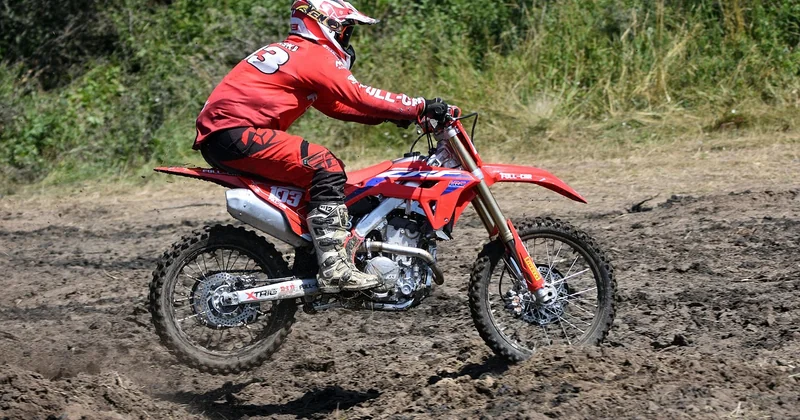
Riding gear: the non-negotiable layer
Your riding gear is a separate checklist from everything else, and it's the one place where redundancy is worth the weight. Because a failed glove or a leaking jacket doesn't just ruin a day — it ends the rally.
What to wear versus what to pack
Wear your primary jacket and trousers. Pack the backup layer, not a backup suit. Here's what I carry for a four-day rally in mixed conditions:
- Two pairs of gloves — one waterproof and insulated, one lighter for warm afternoons. Gloves take 24+ hours to dry properly.
- A packable rain suit that fits over your gear, not instead of it. Roughly 400 g folded.
- An insulating mid-layer, fleece or synthetic, that fits under the jacket without restricting movement.
- A neck tube and a thin balaclava — the two cheapest items that change how a cold morning feels.
- Earplugs, in a hard case. Non-negotiable for multi-day riding. Fatigue compounds faster than you think.
- Spare visor or a visor cleaning cloth in a zip bag.
One thing I got wrong for two rallies in a row: I packed a second jacket "just in case." It weighed 2.3 kg and never left the saddlebag. Now it stays home.
Boots and the wet-feet problem
Waterproof boots are worth the money, but they're only half the solution. The other half is two pairs of spare socks, sealed in a plastic bag, plus a third pair of thin liner socks you wear under the main ones. Wet feet on day three of a rally are genuinely miserable and, worse, a real safety issue — cold, damp feet reduce your feel on the pegs and your concentration.
Clothing checklist: quantities, not categories
Here's where most checklists fail. "Bring clothes" tells you nothing. You need numbers.
For a four-day rally with three overnight stops, my actual clothing list:
| Item | Quantity | Why this number |
|---|---|---|
| Technical base layer (top) | 2 | One worn, one drying after a sink rinse |
| Technical base layer (bottom) | 1 | Rinse nightly, dries by morning |
| Riding trousers | 1 | Worn throughout; pack no backup |
| Off-bike trousers | 1 | Lightweight, packable, for evenings |
| T-shirts (off-bike) | 2 | Merino or synthetic, not cotton |
| Socks — riding | 3 pairs | Plus 2 liner pairs |
| Socks — off-bike | 1 pair | Because dry feet at dinner matter |
| Underwear | 3 | Synthetic; cotton stays wet |
| Fleece or mid-layer | 1 | Doubles as evening warmth |
| Lightweight packable jacket | 1 | Windproof, for off-bike evenings |
Total clothing weight in my setup: about 4.2 kg. That's the number I check against every time, and it's the one I'd defend hardest. Notice what's absent: no jeans, no cotton T-shirts, no "nice" outfit. Rallies are not fashion events.
Why merino beats cotton every time
Cotton holds moisture against your skin and takes forever to dry. On a rally, that means a damp base layer all day and a cold one at night. Merino wool or a good synthetic blend handles sweat, resists odour for several days, and dries overnight in a tent. I switched after spending one rally in cotton and regretting it by the second morning.
What to buy on site instead of packing
Consumables and emergency replacements. Chain lube, fuel additives, water, snacks, a cheap spare pair of gloves if yours fail. Vendor prices at rallies are marked up — sometimes by 30 to 50 percent — but a 15-euro spare beats a ruined day of riding with a torn glove.
Tools and repair kit: what actually gets used
I've carried a full socket set on a rally exactly once. It stayed in the saddlebag, unopened, and I could feel the extra 3 kg every time I changed direction. Now I carry a focused kit that fits in a pouch the size of a paperback.

- Zip ties — a handful, various sizes. Fixes fairings, luggage straps, cable routing, and one memorable broken roadbook holder.
- A compact multitool with pliers and a blade.
- Tyre repair kit: plugs, insertion tool, and a small compressor or CO₂ cartridges. Know which your bike needs.
- Chain lube in a small can, plus a rag in a sealed bag.
- Spare fuses and a spare bulb if your bike uses one.
- A small roll of duct tape, flattened onto itself so it takes no space.
- Jump-start pack, if your bike has any history of electrical quirks.
That's roughly 1.8 kg. It has saved me twice — once with a zip tie holding a fairing together for 400 km, once with a tyre plug that got me to the next town. It has never let me down in a way that required a full socket set.
The self-sufficiency rule
On rally routes that take you through remote stretches — and most multi-day events have at least one — you are your own mechanic for the first hour. That's the reality. Carry what lets you solve a problem and reach help, not what lets you rebuild the bike at the roadside.
Documents, electronics, and the small stuff that adds up
This is the category that quietly bleeds weight and space. Here's the trimmed version.
Documents you genuinely need
Licence, insurance certificate, registration, and any rally-specific paperwork or roadbook. Keep them in a single waterproof wallet in the tank bag, not scattered. Add a printed copy of emergency contacts — phone batteries die, and a paper backup weighs nothing.
Electronics that earn their place
- Phone, mounted, with a charging cable and a power bank (10,000 mAh, roughly 200 g).
- A single USB charger with two ports — one is for the phone, one for whatever else.
- Headlamp or small torch, hands-free, for tent setup in the dark.
- Optional and debatable: an action camera. I carry one on some rallies and leave it home on others. It adds 400 g and one more thing to charge.
The comfort items that are worth their weight
A small first-aid kit with painkillers, blister plasters, and antihistamines. Earplugs for the campsite, not just the road. A microfibre towel. And one thing that isn't strictly necessary but makes the whole rally better — for me, a small flask. Decide what yours is and pack it deliberately, rather than letting it sneak in.
Packing the bike: order and balance
Load the saddlebags first, balancing weight left and right within about 1 kg. Then the top case, light items only. Then strap anything else — sleeping bag, tent if you're carrying it — low and centred, never hanging off one side.
Two things I learned the hard way: check your luggage after the first 50 km, because straps settle and shift; and weigh your bags before you leave, because human beings are terrible at estimating weight. I once thought a bag was 8 kg. It was 12.
What to do the night before
- Lay everything out on the floor and remove one item from each category. You will not miss it.
- Pack the daily bag last, so it sits on top.
- Test your rain suit over your riding gear, fully dressed. If it doesn't fit over the jacket, it doesn't work.
- Charge everything. All of it. Including the jump-start pack.
- Check tyre pressures loaded, not empty. The difference is real.
And then, honestly, ride. The checklist gets you out the door. Everything after that is the rally.
The best packing list isn't the longest one — it's the one where you can name, for every single item, the moment on the road when you needed it. If you can't picture that moment, leave it at home. Your bike will thank you, and so will your shoulders on day four.