You've paid the rally fee, you've got the rig fuelled and loaded, and then comes the question that quietly ruins more rally weekends than bad weather ever will: where exactly do you park? Get it wrong and you're three-quarters of a mile from the beer tent with a generator humming outside your window until 2 a.m. Get it right and the whole week clicks.
I've booked rally sites for a group of eleven coaches, arrived late to a sold-out field and slept in a Wal-Mart lot instead, and once reserved a spot that turned out to be a muddy slope. That last one cost me a bent stabiliser jack and a very quiet drive home. So here's the framework I actually use now when choosing rally campground spots, including the questions people ask me most often about Sturgis, RV age rules and campground jargon.
Key takeaways
- Book the rally block, not just a site — group organisers hold specific loops, and those loops sell out months before the event.
- Distance to the gathering point matters more than any amenity list. Fifteen minutes of walking each way, four times a day, adds up.
- Ask about generator hours, quiet-time enforcement and the 10-year RV rule before you pay a deposit.
- Verify what "FF" and other hookup codes mean at that specific campground — definitions vary.
- Arrive in daylight if you can. Site numbers on a map rarely match what the terrain actually looks like.
Why rally camping isn't just camping with more people
A regular campground rewards you for picking a pretty site. A rally rewards you for picking a functional one. Those are different decisions.
At a rally, you're not self-contained. You're part of a temporary village that needs shared space: a fire ring big enough for eight chairs, a table where the group eats, room for a neighbour's tow vehicle, and a clear path to whatever the daily meeting point is. I learned this the hard way at a rally in the Black Hills where our four sites were technically adjacent but separated by a drainage ditch. We spent the entire week shouting across it.
The four things that actually matter
- Proximity to the action — stage, pavilion, or shuttle stop. Under a ten-minute walk is the threshold I aim for.
- Pad surface and level — gravel and asphalt drain; grass turns to soup after two days of rain and 300 boots.
- Shared hookups — many rally sites run one 30-amp pedestal between two rigs. Confirm who gets the amperage.
- Noise geography — generators, the band, and the road all have their own zones. You want to be inside none of them.
Which of those four is negotiable depends on your rig. A 45-foot diesel pusher with a residential fridge cannot compromise on power. A converted van with solar can compromise on almost everything else.
How to choose the best campsite, step by step
Here's the sequence I run through now, in order. It takes maybe forty minutes of work and saves days of regret.
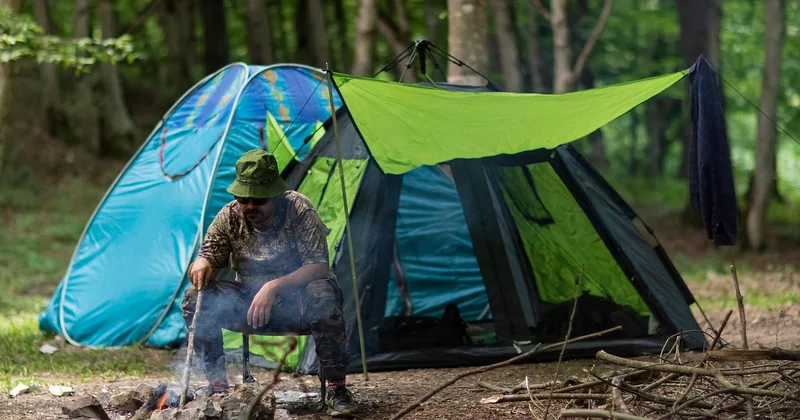
- Get the rally map first. Most events publish a site plan weeks ahead. Print it and mark the meeting point, the showers, the dump station and the exit road.
- Call the campground directly. Not the booking platform — the front desk. Ask which loops the rally has blocked and which sites inside those loops have full hookups.
- Ask three specific questions: What's the pad surface? How many amps per pedestal? What are the generator and quiet hours, and are they enforced? If the person answering hesitates on any of them, that tells you something.
- Check the approach road. Narrow bridge, low tree canopy, tight turn at the gate? Ask for dimensions. A site you can't physically enter is not a site.
- Book the block, then assign internally. If you're the organiser, reserve the whole loop and sort out who gets which number among yourselves once everyone's confirmed.
One more thing I'd insist on: get confirmation in writing. Verbal promises about "the good spots" evaporate the moment a bigger group calls.
What to ask the campground before you commit
Beyond the basics, these five questions have saved me real trouble:
- Is there a group discount, and does it require a minimum number of nights?
- Can we hold sites without paying for all of them upfront?
- What's the cancellation policy if the rally itself is postponed?
- Are pets allowed in the rally loop, and is there an off-leash area?
- Is there anywhere to park an extra vehicle or trailer that isn't another paid site?
That last one is underrated. At one rally our group had three trucks with no assigned parking, and we ended up paying for a fourth site just to store them.
Where is the best place to stay during Sturgis Rally?
For the Sturgis Motorcycle Rally, the best place to stay depends on how much you value sleep versus convenience — but the honest answer for most riders is a campground just outside Sturgis town itself, within shuttle distance of the main drag. Staying in town puts you in the middle of the noise and traffic; staying an hour out means long, tired rides back after dark. The middle band, roughly ten to twenty minutes from downtown, is the sweet spot.
Three broad options, with the trade-offs spelled out:
| Option | Best for | The catch |
|---|---|---|
| Campgrounds near Sturgis with shuttle service | Riders who want nightlife without riding drunk or tired | Books out earliest; shuttle queues after headline sets |
| Ranch and field camping further out | Groups wanting space, fires, and quiet | You'll ride 30–60 minutes each way, daily |
| Full-hookup RV parks in nearby towns | Families, big rigs, anyone needing reliable power | Less rally atmosphere; you'll drive to everything |
Book early — I'm talking months, not weeks. The closest sites with hookups are typically gone well before spring. If you're arriving in a group, call and ask specifically about blocked loops rather than booking individual sites online and hoping you land near each other.
What is the 10 year RV rule?
The 10-year RV rule is a policy some campgrounds and RV resorts apply that bars rigs older than ten model years from staying on site. It isn't a law and it isn't universal — it's a private business decision, and it varies enormously from park to park. Some enforce it strictly, some apply it only in peak season, and plenty of campgrounds have no such rule at all.
Why does it exist? Parks use it as a shortcut for maintenance standards and visual consistency. In practice it catches plenty of immaculate older coaches and lets through plenty of neglected newer ones.
What to do about it:
- Ask directly, before booking, whether an age restriction applies.
- Many parks that have the rule will waive it if you send photos of your rig.
- Rally-specific loops are often exempt, since the event organiser has already vetted attendees.
I've seen a 1998 coach in better shape than most of the 2019s in the same field. But the rule is the rule, and arguing at the gate at 9 p.m. is not a productive use of your evening.
What does FF mean at a campground?
At a campground, FF most commonly stands for full facilities or full hookups — meaning the site has water, electric and sewer connections. But here's the catch: the abbreviation isn't standardised, and I've seen it used to mean "family friendly" and, on one booking system, "fire pit and firewood." Always confirm the definition with the specific campground rather than assuming.
Related codes you'll run into: W/E for water and electric only, E for electric only, DR for dry (no hookups), and PH for partial hookups. If a listing shows only letters and no legend, call.
The mistakes I made so you don't have to
Three of them, in order of how much they cost me.
Booking on price alone. I saved about $12 a night on a site two miles from the rally ground. The daily shuttle for two people ate that saving and then some, and we missed the evening socials entirely because the last shuttle left at 10.
Assuming the map was accurate. Site 47 on the plan turned out to be a sloping gravel patch behind the laundry block. Now I ask for photos of the specific numbered site, and I've never been refused.
Not asking about quiet hours enforcement. Rules on paper and rules in practice are different things. Ask whether security walks the loop at night. If the answer is vague, expect to hear your neighbour's stereo.
The five-minute check before you pay
Before you hit confirm, run this: Is it inside the rally block? Can my rig physically get in and out? Do I have the hookups I actually need, not just the ones advertised? Am I within a reasonable walk of the meeting point? And do I have written confirmation of all of it?
Five questions. If any answer is unclear, make one more phone call. The sites closest to the action get claimed by people who called in February, and the difference between a good rally and a frustrating one is often nothing more than a phone call made six months early.