Twenty minutes in a gas station parking lot at the start of a trip will tell you more about your motorcycle than the previous three months of riding. I learned that the hard way on a Tuesday morning somewhere south of Lyon, when I discovered my chain had eaten through its own adjuster nut about forty kilometres from the nearest town with a mechanic. The bike had felt fine. That's the trap.
So let's talk about basic motorcycle maintenance before a long road trip — not the romantic version where you check a few things and ride into the sunset, but the version where you actually find the small problems before they find you at 400 kilometres from home.
Key Takeaways
- Do your checks two weeks before departure, not the night before. Parts take time to arrive.
- Tire pressure must be adjusted for load, not copied from the sticker under the seat.
- Your chain slack changes once the bike is loaded — re-check it after the first 300–500 km.
- Carry the tools to fix what you're most likely to break, plus one spare of your most fragile component.
- A shakedown ride with full luggage reveals more than any inspection checklist.
How should you prepare your motorcycle for a long trip?
The honest answer: start earlier than feels reasonable, and test the bike in the exact state it will be in when you leave. Most trips go wrong not because the rider ignored maintenance, but because they maintained the wrong version of the motorcycle — the unladen, casually ridden one, not the loaded, hot, running-ten-hours-a-day one.
Work in a window that gives you room
Two to three weeks before departure is the sweet spot. Anything sooner and a worn tire or a stretched chain becomes a crisis rather than a planned purchase. Anything earlier and the work you do gets undone by normal riding.
Here's how I structure that window:
- Week three out — full inspection, order whatever parts you need.
- Week two — do the work, change fluids, fit new consumables.
- Week one — loaded shakedown ride, 100–150 km with all your luggage, then re-torque and re-check.
The loaded shakedown ride
Nothing else in this article matters as much as this step. Load the bike exactly as you'll travel — panniers, top box, tank bag, everything. Ride for two hours. Then look for what moved: strap rub marks, a luggage rack that flexed more than you expected, a headlight aimed at the treetops because the rear sagged.
On a trip I took to the Alps, I discovered during the shakedown that my rear preload was two clicks too soft for the load. Fully loaded, the front wheel felt light in slow corners. Adjusted it and the bike transformed. Two clicks. That's the margin you're looking for.
What should you check on your motorcycle before a long trip?
Tires, chain, brakes, fluids, lights, battery. You've seen the list before. What's missing from most of them is the numbers — because "check your tires" is useless advice if you don't know what you're checking for.
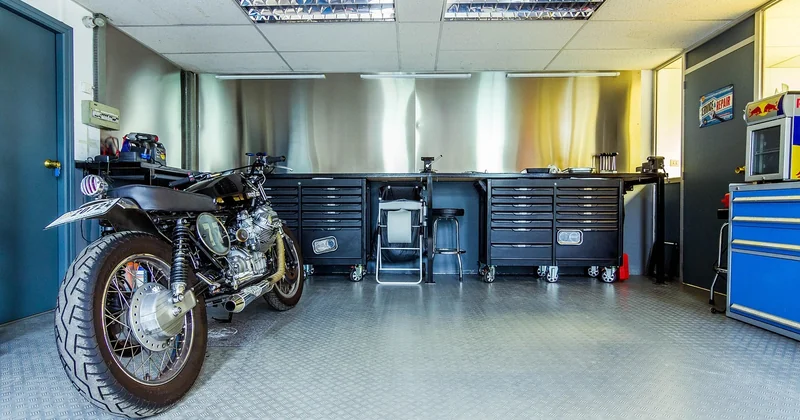
The numeric checklist
Here's what I actually write on a piece of tape on the inside of my tank bag:
| Component | What to verify | Rough target |
|---|---|---|
| Front tire | Pressure with luggage fitted | +0.2 to +0.3 bar over solo spec |
| Rear tire | Pressure, tread depth | +0.2 to +0.4 bar; tread ≥ 2 mm |
| Chain | Slack at the tightest point | 20–30 mm on most road bikes, per manual |
| Brake pads | Friction material thickness | Replace below ~2 mm |
| Oil | Level, colour, smell | Between the marks, not black-tar |
| Battery | Resting voltage | ~12.6 V cold, engine off |
Those figures are approximations that suit a typical mid-sized road bike. Your manual is the authority — go and read it, it's the only document that knows your specific machine. But the principle is what matters: every check needs a number attached to it, otherwise it's just a feel-good ritual.
The parts people skip
Cables and levers. Look at the clutch cable where it enters the lever housing — this is where strands fray, and it's the failure that ruins a day. Squeeze the front brake and watch the cable or line for movement at the fittings. Check the throttle doesn't bind when the bars are turned fully to either side. These take four minutes and cost nothing.
Then there's the one nobody mentions: check that your tools actually fit your bike. I once carried a full kit across three countries and discovered on a mountain pass that the hex key I needed was one size off. Useless. Fifty grams of useless steel.
What is the 12 second rule on a motorcycle?
The 12-second rule is a scanning guideline: look approximately twelve seconds ahead of your current speed to spot hazards early enough to react calmly. At highway speeds that's a few hundred metres down the road; in town it's the next junction or two. It isn't a maintenance rule at all, but it belongs in this article because it's the cheapest safety upgrade available and it reflects the same discipline — looking early so you're never surprised.
In practice, you count: pick a fixed object ahead, count "one thousand and one, one thousand and two" until you reach twelve or until you arrive. If you arrive sooner, you're either too fast or your eyes are too close to the front wheel. Racers and advanced riding instructors teach a version of this because it works.
My personal habit: on the first day of any trip, I run the scan deliberately for the first hour. It resets my eyes after months of short commutes where the horizon didn't matter. It also, incidentally, makes you notice road surface problems — gravel, tar snakes, expanding joints — much earlier. Which brings you back to tires and suspension.
What maintenance should you actually do before a road trip?
There's a difference between inspection and work. Inspection is free. Work costs money and time. Be ruthless about which is which, because most riders over-service the easy stuff and under-service the expensive stuff.
Do these checks yourself
- Fluid levels (oil, coolant, brake fluid in the reservoir window)
- Tire pressure and tread
- Chain tension, lubrication, sprocket teeth
- Brake pad thickness and lever feel
- All lights, indicators, horn, kill switch
- Fasteners on anything you touched recently
Pay someone for these, or learn them properly
Valve clearances, brake fluid flush, suspension setup. These need experience, torque wrenches, and the ability to know when something is wrong. If you're two weeks out and unsure, a workshop hour is cheaper than a breakdown on a Sunday in a country where nothing opens.
One thing I'll defend firmly: if you have to choose between a professional service and a new accessory, take the service. Every time. I've seen riders with a €400 exhaust and a chain that was about to snap. Don't be that rider.
What goes in the kit
Not a full tool chest. A small, targeted set:
- Tire pressure gauge — your own, not the one at the station
- Chain brush, lube, and the correct spanner for your axle nut
- Allen key set matching your fasteners
- Cable ties, electrical tape, a spare fuse or two
- A tire plug kit if your tires aren't tubeless-incompatible (check first)
- Your registration, insurance, and a card with the number of a recovery service
And one spare of the most fragile part you can identify. For me, on the last two trips, it was a spare clutch cable. It cost eight euros and never got used. That's the point.
Before you close the panniers, one last thing: walk around the bike slowly, in silence, with a light. Say nothing. Just look. You'll spot the frayed cable, the weeping fork seal, the missing bolt. Or you'll spot nothing and leave with confidence. Either outcome is worth twenty minutes.
The trip doesn't start when you turn the key. It starts in your garage, three weeks earlier, with a torch and a manual you've been meaning to read. Everything after that is just riding.