You're rolling through a mountain pass somewhere, gloves on, and the road forks without a sign. Your phone is strapped to the bars, but the sun has cooked it into thermal shutdown twice already. That's the moment most riders start shopping for a dedicated motorcycle GPS. And that's also the moment where most buying advice falls apart, because the question isn't "which unit has the biggest screen" — it's "which one survives your kind of riding."
Something I learned the hard way on a week-long trip through the Alps: navigation gear for motorcycle touring lives or dies on three boring things — power, mounting, and whether you can read it at 70 km/h with the sun in your face. The brand name barely matters. Here's what actually holds up.
Key takeaways
- A dedicated motorcycle GPS beats a phone on daylight readability, glove-friendly controls, and heat tolerance; a phone beats it on price and map freshness.
- Wired power to the bike is non-negotiable for touring — a USB port dangling from the bars will fail you.
- The best setup for adventure riding is a rugged unit with offline maps and GPX import, not the fanciest screen.
- The 12-second rule is a safety habit, not a feature — no device replaces the discipline of glancing.
- Anti-theft trackers and navigation units solve two different problems; serious tourers eventually buy both.
What the best GPS navigation for motorcycle touring actually gets right
Honestly, the "best" unit is the one you stop thinking about. My test is simple: if I have to take my eyes off the road for more than a beat to understand what the screen is telling me, it's the wrong device — regardless of what it cost.
Dedicated unit or smartphone app?
This is the argument that never ends in rider forums, so let me take a side. For pure touring — long days, mixed weather, unknown roads — a purpose-built motorcycle GPS wins. Here's why the trade-off isn't close:
- Sunlight readability. A proper unit uses a transflective or high-brightness display that gets more legible in direct sun. My phone, at full brightness, was a grey mirror by noon.
- Heat. Phones throttle or shut down when the camera and GPS run hot in a sealed case on a black dashboard. I lost navigation three times in one afternoon in August before I gave up.
- Gloves. Physical buttons and resistive touchscreens work with winter gloves. Capacitive phone screens mostly don't.
- Vibration. Bar-mounted phones take a beating; image stabilisation on some camera modules has died from it. A dedicated unit is built for the vibration.
- Price. A phone you already own costs nothing extra — which is the one real advantage.
The catch? Dedicated units are expensive, their map updates can be clunky, and the user interface often feels a decade behind your phone. That's the honest trade: reliability for polish.
The specs that actually matter on a touring bike
Ignore the marketing. These are the criteria that decide whether a unit is pleasant or infuriating over 400 km:
| Criterion | What to aim for | Why it matters |
|---|---|---|
| Water and dust rating | IPX7 or better | Rain, spray, and dusty trails are the default, not the exception |
| Power | Wired to the bike, 12V with a fused lead | Battery-only units die mid-route; USB ports rattle loose |
| Screen | 4–6 inches, sunlight-readable | Bigger is not better if it blocks your instrument cluster |
| Route import | GPX support, ideally wireless | Planning on a laptop and pushing the file to the unit is the whole game for touring |
| Offline maps | Full regional coverage stored on device | Mountain passes have no signal, and that's exactly where you need the map |
| Mounting | RAM-style ball or lockable cradle | Cheap clamps vibrate; lockable cradles survive coffee stops |
Notice what's missing from that table: fancy 3D rendering, voice control, social features. None of it survives contact with a wet glove.
What makes a good navigation device for a motorbike
Strip away the categories and a good device does two jobs without complaint: it tells you where to turn, and it lets you build the route you actually want. The second part is where most products quietly fail.
Route planning is the real differentiator
Tourers don't want the fastest way from A to B. They want the twisty way, the scenic way, the way that avoids motorways. A unit that can only compute the shortest path is a commuting tool, not a touring tool. When I plan a trip, I build the route on a laptop — waypoints on every pass, a couple of café stops pinned in — export it as a GPX file, and push it to the unit. If a device can't do that cleanly, I'm not interested.
Curvy-road routing, avoid-highways toggles, and the ability to drop in a track someone else shared: these are the features that separate a touring GPS from a car unit with a waterproof case bolted on.
Mounting and power: the part everyone underestimates
I'll say it plainly: get the power wired to the bike. A USB cable draped over the bars will, at some point, work its way loose on a rough stretch, and you won't notice until the screen goes black 80 km from the next town. A fused lead straight to the battery, tucked along the frame, is a half-hour job and it removes an entire category of failure.
Mounting comes next. Bar-mounted ball systems are cheap and adjustable; lockable cradles cost more but let you leave the bike while you eat lunch. I've used both — the cheap clamp survived exactly one trip before it started drifting downwards every few hundred metres.
What is the 12 second rule for motorcycle riders?
It's a self-imposed discipline: never look away from the road for more than about 12 seconds while riding — and honestly, most safety advice I've seen puts the safe glance at a fraction of that, a couple of seconds at most, with any longer look saved for a stop. The point of stating it as a hard limit is that it forces you to design your whole setup around short glances. Big obvious turn arrows, a screen angled so you catch it with your peripheral vision, audio prompts so you don't need to look at all.
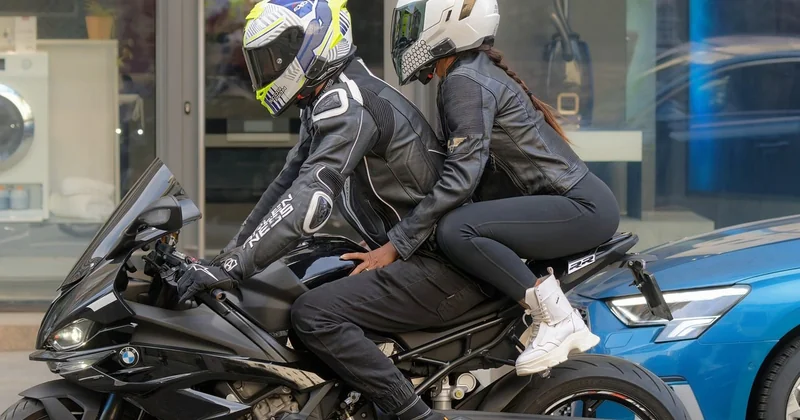
At motorway speed, a long look at a screen is a lot of blind metres. That's the whole reason I care so much about glove-friendly controls and readable-at-a-glance displays: every second you save squinting at the map is a second your eyes are on the road.
What is the best tracking device for a motorcycle?
Different problem, different product. A navigation unit lives on the bars; a tracker hides on the bike. The best tracking device for a motorcycle is a small, hard-wired GPS unit with its own SIM that reports position and raises an alert if the bike moves while armed — mounted somewhere awkward to reach and preferably with a backup battery, so cutting the bike's power doesn't kill it.
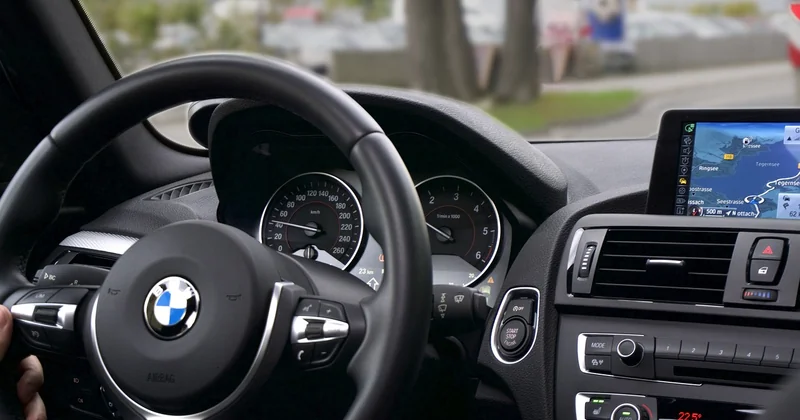
Two things to weigh: subscription cost (most trackers need a live data plan) and coverage in the places you ride. In my experience, trackers pay for themselves the first time one works — and are pure dead weight the moment you let the subscription lapse. If you tour and leave the bike parked in unfamiliar towns, a tracker is a reasonable complement to a good lock, not a replacement for one.
Adventure riding and the small GPS question
Adventure riders — the ones leaving tarmac — want something different from a touring rider. Off-road you need the screen to show terrain detail, tracks (not just roads), and the ability to follow someone else's GPX well off the mapped network. A unit built for road routing will happily try to send you down a bridleway or refuse a track entirely. That mismatch is the single most common complaint I hear from riders who bought a road-biased unit for a trail trip.
Are small units worth it?
Yes — if you're honest about what you're sacrificing. A compact handheld-style unit is easy to mount, light on the bars, and doesn't dominate your cockpit. The trade is screen size and readability at speed. My rule of thumb: if the screen is smaller than the palm of your hand, plan to rely on audio prompts and pre-built routes rather than reading the map mid-corner.
How waterproof does it really need to be?
More than you think. IPX7 means it survives being submerged briefly, which sounds excessive until you ride through a proper downpour or a deep puddle. I've had a supposedly weather-resistant unit fog up internally after a long wet day; the display never recovered properly. Buy the rating, not the marketing line.
A setup that actually works on tour
Here's the configuration I've settled on after a few years of trial and error, offered as a starting point rather than gospel:
- One dedicated, wired, IPX7-rated unit on a lockable bar mount.
- Routes planned on a laptop, exported as GPX, pushed to the device before each day.
- Audio prompts on, so most turns never require a glance at the screen.
- A phone in a pocket for emergencies, not strapped to the bars.
- A discreet tracker in the frame if the trip involves leaving the bike parked in cities.
And one thing I'd tell anyone starting out: don't buy the most expensive unit on the shelf. Buy the one whose interface you can operate in gloves, and learn its route-planning software properly before you leave. The device you understand is worth more than the device with the best spec sheet.
You'll still miss a turn. That's fine. The point of good navigation gear isn't perfection — it's making the wrong turn somewhere beautiful instead of somewhere terrifying.