It's 34°C in the shade, you're sitting at a red light in full sun, and the jacket that felt so good in the shop three months ago now feels like a plastic bag tied around your chest. You can feel sweat running down your spine. Your visor fogs. And you start to wonder, honestly, whether riding in a T-shirt might not be the smarter move after all.
It isn't. But the fact that you're tempted tells you something useful: most riders buy an hot weather motorcycle jacket for the wrong reason. They buy it to feel cool, when what they actually need is a jacket that manages heat and still holds together when you hit the asphalt. Those are two different engineering problems, and very few jackets solve both.
I've made this mistake twice, in opposite directions. Once with a mesh jacket so open that a 40-minute ride through a city at noon left my arms sunburnt through the fabric. Once with a heavy textile jacket that was genuinely excellent protection and completely unwearable above 28°C, which meant I stopped wearing it exactly when I needed it most. Both were bad purchases. Not because the jackets were bad, but because I hadn't worked out what I was actually buying.
Key takeaways
- Ventilation and abrasion resistance pull against each other. Every jacket is a compromise; your job is to choose which compromise matches your riding.
- Fit matters more than fabric in hot weather. A jacket that's slightly too tight blocks airflow no matter how much mesh it has.
- Removable waterproof liners are the single biggest source of overheating, and a common design flaw.
- Colour is not cosmetic: dark fabric in direct sun absorbs significantly more heat, and you'll feel it at traffic lights more than at speed.
- If you ride in humid heat, you need a different jacket than someone riding in dry desert air.
Why most hot-climate motorcycle jackets fail you
The problem isn't the heat. It's the humidity, the traffic lights, and the fact that jackets are tested in wind tunnels and sold in air-conditioned showrooms.
Airflow works on a simple principle: moving air across your skin carries heat away. At 90 km/h, almost any jacket feels tolerable, because the air is doing the work regardless of the fabric. At 0 km/h—stuck behind a truck at a junction—only the fabric matters, and most ventilation systems are designed for the first case. This is why riders who only ever test a jacket on a fast open road are constantly surprised by how badly it performs in town.
Airflow at speed versus airflow at a standstill
There's a rough hierarchy you can apply. Perforated leather moves a little air and stops almost nothing in terms of abrasion. Dense technical textile with zipped vents moves a moderate amount and protects well. Mesh with reinforced panels moves a lot of air and protects well in the reinforced zones only. Full mesh with no reinforcement panels moves the most air and protects you essentially where the armour sits and nowhere else.
That last category is where a lot of cheap summer jackets live. Look at the shoulders and elbows on any mesh jacket before you buy—if the mesh runs uninterrupted from collar to cuff, you're looking at a garment that will protect you at low speed and shred in a slide. I learned this the expensive way on a low-side at maybe 50 km/h. The jacket held. The forearm didn't, because that panel was pure mesh.
The liner problem nobody warns you about
Here's a detail the spec sheets bury: many mid-range jackets ship with a removable waterproof liner, and riders leave it in "just in case". That liner is a vapour barrier. It sits between your sweat and the outside world and turns a ventilated jacket into a sauna. If your jacket has one, take it out in spring and don't put it back until the first genuinely wet week.
The better arrangement, in my view, is a jacket with no built-in waterproof layer at all, plus a separate lightweight rain shell you carry in a tail bag. It's one more item to pack, and it's the difference between a jacket you wear for eight months and one you wear for three.
How to choose a motorcycle jacket for hot weather
Four things decide whether you'll actually wear the thing in July. Not five, not ten.
Fit and shape
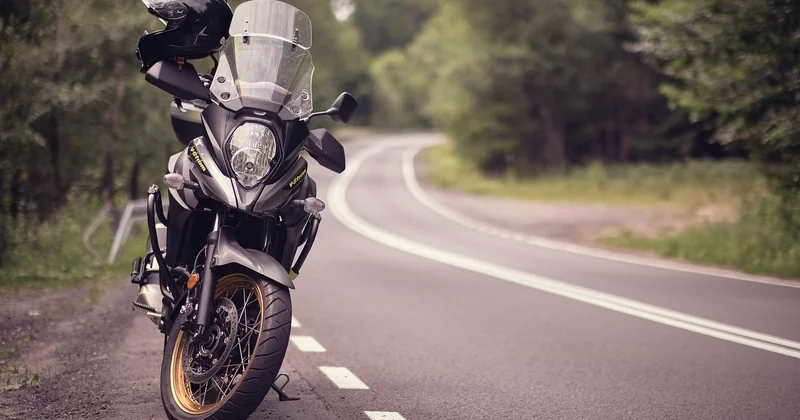
A hot-weather jacket should be close but not tight. Snug at the shoulders and chest, with a little room at the waist so air can move through rather than ballooning the fabric away from your body. Too loose and the jacket inflates at speed and flaps; too tight and you lose the micro-gap between fabric and skin that lets sweat evaporate.
Try it on with the armour in. A lot of jackets feel fine until the shoulder and back protectors go in, at which point the chest panel goes taut and the airflow you were counting on disappears.
Abrasion rating and armour certification
In Europe, jackets are rated under the EN 17092 standard, with classes A, AA and AAA—AAA being the highest abrasion resistance. Armour is separately rated CE Level 1 or Level 2. A very open mesh jacket can still reach A or AA if the manufacturer reinforces the right zones; getting AAA out of a genuinely airy jacket is much harder, and you should treat anyone claiming it as either very clever or slightly optimistic.
What does this mean in practice? For commuting at moderate speeds in town, A-rated mesh with Level 2 armour is a reasonable place to land. For fast open-road riding, look for AA and accept less airflow. That trade is the whole game.
Colour and fabric weight
Black looks better. Black also sits in the sun at a traffic light and turns the surface of the jacket into a heat exchanger pointed directly at your chest. A light grey, sand or white jacket of the same construction will feel meaningfully cooler when you're stationary, and identical once you're moving. If you only ride on open roads, this matters less. If you commute through a city, it matters every single day.
A quick comparison of the main jacket types
| Type | Airflow at a standstill | Abrasion protection | Best for |
|---|---|---|---|
| Full mesh, reinforced | Very high | Good in reinforced zones | Hot, humid commuting |
| Technical textile with vents | Moderate | High | Mixed riding, three seasons |
| Perforated leather | Low to moderate | Very high | Dry heat, spirited riding |
| Unperforated leather | Minimal | Very high | Not hot climates |
| Adventure jacket with removable liners | Moderate once stripped | High | Long trips, variable weather |
A men's motorcycle jacket buying guide for hot climates
Gender-labelled gear is mostly a sizing and cut question, but there is one genuine difference worth flagging: men's jackets are often cut broader across the chest and shorter in the body, and that broader chest can work against you in mesh. The larger the front panel, the more fabric sits between the air and your skin.
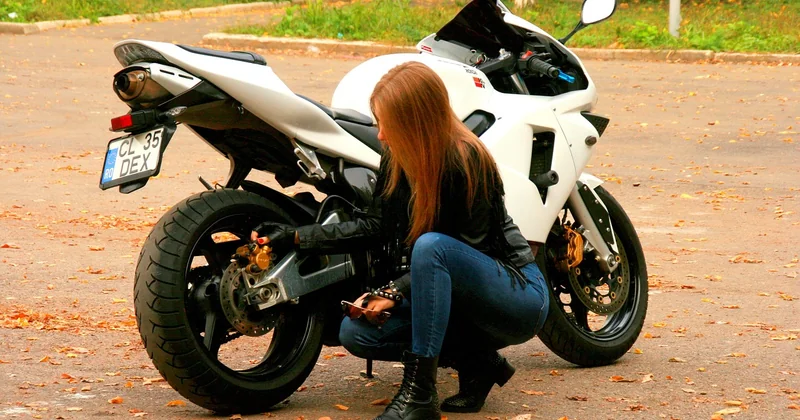
What I'd look for, concretely:
- Reinforced shoulders, elbows and back panel—these should be a different material from the mesh, not just a double layer of it.
- Armour pockets that actually hold the pads in place. Loose pockets mean armour that rotates out of position in a slide.
- An adjustable waist strap, not just Velcro at the cuffs.
- A short connection zip for your trousers. Small thing, big difference in a slide.
- And a collar that doesn't sit tight against the throat—heat builds there fast.
One more thing: check the sleeve length in a riding position, not standing. Arms forward, hands on imaginary bars. If the cuffs ride up past your wrist bones, the jacket is too short in the arm and your forearm will be exposed.
Dry heat and humid heat are not the same problem
This is the point most guides skip entirely, and it changes what you should buy.
In dry heat—think inland Spain, Arizona, the Australian interior—evaporation is fast. Mesh works brilliantly because sweat evaporates almost as quickly as you produce it, and the airflow does the rest. Leather, oddly, performs better here than people expect, because it doesn't trap moisture the way a synthetic liner does.
In humid heat, evaporation is slow. The air is already close to saturated, so a fully open mesh jacket gives you airflow without much cooling, and you end up wet and uncomfortable rather than cool. Here, a lighter-coloured jacket with controlled ventilation and a moisture-wicking base layer under it works better than maximum mesh. Counter-intuitive, but consistent with how evaporative cooling actually functions.
I rode through a coastal summer on a full-mesh jacket before working this out. Three weeks of feeling clammy at every stop, and the fix was a lighter-coloured, less open jacket plus a proper technical base layer. Cost me about €40 for the base layer. Should have been the first thing I bought.
Mistakes that will cost you a season of riding
Buying the most ventilated jacket you can find. Ventilation without reinforcement is a false economy. You've bought a T-shirt with a zip.
Leaving the waterproof liner in. Covered above, but worth repeating because it's the most common avoidable error I see.
Ignoring the back protector pocket. If the jacket doesn't take one, you'll be wearing a separate back protector or none at all. Decide which before you buy.
Sizing down for a "better look". A jacket that's tight across the chest doesn't vent. It just looks like it should.
Assuming leather is out of the question. Perforated leather in dry heat is a legitimate option, and it lasts far longer than mesh, which stretches and abrades at the seams over a few seasons.
And the one I got wrong: buying for the temperature on the day I shopped. A 22°C spring afternoon in a shop tells you nothing about a 36°C August commute. Buy for the worst day, not the best one.
What to actually do
Decide first what your riding actually looks like—commuting, touring, weekend blasts—and pick the compromise that matches. Commuters in humid cities should look at reinforced mesh in a light colour, with a separate rain shell and no built-in liner. Dry-heat riders have more freedom and can reasonably consider perforated leather. Anyone doing long mixed trips should expect to own two jackets, and that's not a failure of planning; it's just what the physics demands.
Then go and try three on, in a shop, with armour in, in your riding position. You'll know within a minute which one you'd actually wear when it's 35 degrees outside and the alternative is taking the car.
The jacket you wear is worth more than the jacket with the better label. Everything else is marketing.